
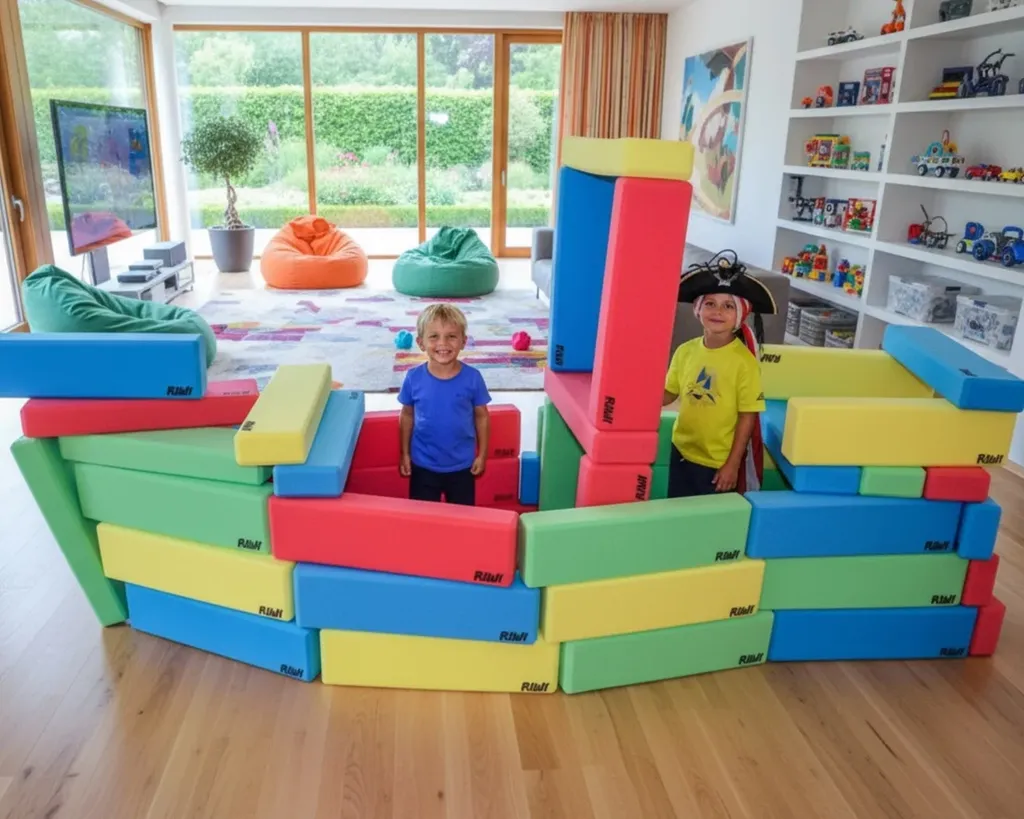
When children need an exciting activity indoors, Giant Building Blocks can turn an ordinary room into a world of creativity, exploration, and imaginative adventure. Giant Building Blocks provide children with large, easy-to-handle pieces that encourage construction without requiring complicated instructions. Whether kids are building forts, towers, tunnels, or pretend-play environments, Giant Building Blocks offer an engaging way to stay active while enjoying a supervised indoor activity. For families looking for a practical play solution, Giant Building Blocks can make indoor adventures more creative, interactive, and enjoyable.
Why Giant Building Blocks Are Great for Indoor Play
Indoor play should give children opportunities to move, create, and explore while maintaining a suitable level of safety. Large construction pieces are particularly useful because children can use them to design structures that match their imagination.
Unlike small construction toys that may require detailed assembly, oversized blocks are simple to grasp and arrange. Children can quickly understand how pieces connect, stack, or balance. This simplicity allows them to focus on creative thinking rather than complicated instructions.
Giant Building Blocks can also encourage independent play. A child may begin by creating a simple wall and then transform it into a castle, shop, garage, or secret hideaway. Each new idea creates another opportunity for imaginative learning.
Supporting Active Indoor Adventures
Children do not always need electronic entertainment to stay engaged indoors. Building activities can encourage movement through lifting, carrying, stacking, arranging, and rebuilding pieces.
Giant Building Blocks make this type of active play possible in a controlled indoor environment. Parents can create a designated building area where children have enough room to construct their designs without interfering with furniture or walkways.
Safety Benefits of Oversized Construction Toys
Safety is one of the most important considerations when selecting indoor toys. Parents and caregivers should always choose age-appropriate products and follow the manufacturer's instructions. For more information about large building blocks for kids, explore their features, benefits, age suitability, and role in encouraging imaginative and educational play.
Large building pieces can make construction activities easier to supervise because the components are highly visible and generally easier for children to handle than numerous tiny pieces. However, safe play still depends on proper use, suitable flooring, and adult supervision when necessary.
Giant Building Blocks should be used on a stable surface with enough surrounding space for children to move comfortably. Structures should also remain within an appropriate height for the child's age and abilities.
Creating a Safe Building Zone
Before starting an indoor construction session, clear the selected area of unnecessary furniture, sharp objects, and fragile decorations. A carpet, play mat, or other suitable surface can help define the play zone.
Encourage children to build away from stairs, doors, windows, and other potentially hazardous areas. Keeping the construction space organized can also reduce the risk of tripping.
Parents can establish simple rules such as walking around structures instead of running, avoiding climbing on unstable constructions, and asking for help when a structure becomes difficult to manage.
Creative Ideas With Giant Building Blocks
One of the biggest advantages of large construction toys is their versatility. Children can repeatedly use the same pieces to create completely different adventures.
Build an Indoor Fort
A classic fort can become a cozy reading area, pretend campsite, or secret headquarters. Children can construct low walls and add blankets or cushions where appropriate.
Giant Building Blocks provide a flexible foundation for imaginative fort-building. Kids can decide where the entrance should be, how large the space should become, and what imaginary purpose their fort will serve.
Create a Pretend Castle
A castle-building activity can introduce storytelling into construction play. Children can create towers, walls, gates, and rooms before inventing characters and adventures.
This activity combines physical construction with language development and imaginative thinking. Kids can work individually or cooperate with siblings and friends to create a larger pretend-play environment.
Design a Vehicle Garage
Another fun idea is to create a garage for toy cars, trucks, tractors, or other vehicles. Children can build parking spaces, entrances, service areas, and pretend fuel stations.
This type of play encourages planning and spatial awareness while giving children an opportunity to incorporate their existing toys into a new environment.
Learning Through Construction Play
Play-based learning can support several developmental skills. Construction activities encourage children to experiment with size, shape, balance, and organization.
When a tower falls, children can think about what happened and try another approach. This natural trial-and-error process can help develop problem-solving abilities.
Giant Building Blocks also encourage spatial reasoning. Children learn how different pieces fit together and how changing one part of a structure can affect the entire design.
Developing Fine and Gross Motor Skills
Handling large construction pieces involves reaching, lifting, positioning, stacking, and carrying. These movements can support coordination and body awareness.
Although oversized blocks are primarily associated with physical play, they can also involve careful hand movements. Children need to position pieces accurately when creating walls, patterns, or connected structures.
Encouraging Teamwork and Social Skills
Building activities become even more interesting when several children participate. A group can decide what to build, divide responsibilities, and solve construction problems together.
One child might design the structure while another gathers pieces. Someone else may create a story around the finished construction. This type of cooperative play can encourage communication, patience, sharing, and negotiation.
Giant Building Blocks are especially useful for group activities because large pieces can become part of collaborative structures. Children can discuss their ideas and learn that different approaches can contribute to the same project.
Simple Team Building Challenges
Parents can introduce challenges such as building the tallest stable tower, creating a pretend animal shelter, or designing a small indoor village.
These challenges give children a clear starting point while leaving enough freedom for creativity. The objective does not always have to be winning. The main goal can be experimentation and teamwork.
Making Indoor Adventures More Engaging
A few simple additions can transform construction play into a complete adventure. Parents can provide toy figures, stuffed animals, books, toy vehicles, or safe household play accessories.
For example, children could build a miniature city and create stories for each building. They could construct a rescue station and invent a pretend emergency mission or make a space station for imaginary astronauts.
Giant Building Blocks can serve as the foundation for these changing themes, allowing children to reuse the same construction pieces in countless ways.
Choosing the Right Building Blocks
When selecting large construction toys, consider the child's age, available play space, material, piece size, and intended use. Pieces should be suitable for the child's developmental stage and easy enough to manipulate safely.
Durability is also important for frequently used play equipment. Parents should inspect pieces regularly for damage and remove any broken components from play.
Storage should be considered as well. A practical storage system makes cleanup easier and helps children learn responsibility after completing their adventures.
Keeping Play Areas Organized
Children can participate in cleanup by sorting pieces according to shape or size. Storage bins, shelves, or designated containers can help keep construction materials together.
An organized play area makes it easier to start a new project and reduces clutter. It also helps create a clear separation between active play zones and other areas of the home.
Frequently Asked Questions
1. Are Giant Building Blocks suitable for indoor play?
Yes, Giant Building Blocks can be excellent for indoor play when used on an appropriate surface with sufficient space. Always follow age recommendations and safety instructions.
2. What can children build with large blocks?
Children can create forts, castles, garages, walls, towers, houses, tunnels, pretend shops, and many other structures. Their versatility supports open-ended imaginative play.
3. Do Giant Building Blocks help children learn?
They can support problem-solving, spatial awareness, coordination, creativity, communication, and teamwork. Children naturally practice these skills while planning and constructing structures.
4. How can parents make block play safer?
Create a clear building zone away from stairs and obstacles. Encourage children not to climb unstable structures and supervise play according to the child's age and abilities.
5. How should large building blocks be stored?
Store pieces in sturdy bins, shelves, or another designated area. Sorting blocks by size or shape can make cleanup easier and encourage children to participate in organizing their toys.
Conclusion
Indoor adventures do not have to involve screens or complicated activities. Giant Building Blocks offer children a simple way to construct, imagine, experiment, and stay engaged. From forts and castles to garages and imaginary cities, these oversized construction pieces can support many different types of play.
With an appropriate play area, sensible safety rules, and age-appropriate supervision, Giant Building Blocks can become a valuable addition to indoor playtime. They encourage children to transform simple pieces into creative environments while developing important physical, cognitive, and social skills. Most importantly, Giant Building Blocks give children the freedom to create their own adventures, making every play session a new opportunity for discovery.